Devotional Examples
See what a Daily Braids devotional looks like.
Below are sample devotionals from The Full Braid and The Single Strand. Each one follows the same Scripture passage through reflection, word study, prayer, and practice. Audio companions are included with every paid devotional but are not shown here.
The Full Braid
Isaiah 58:1-12 — Outward (Neighbor)

Picture yourself in church, singing worship songs with perfect pitch while mentally composing your grocery list, or bowing your head in prayer while calculating how much overtime you'll need to afford that vacation. We've all been there, going through the spiritual motions while our hearts are elsewhere, secretly worried that God sees right through our religious performance. The fear gnaws: What if our spiritual life is just an elaborate show, and everyone knows it but us?
Take a moment to read Isaiah 58:1-12. Read it on Bible Gateway if you'd like.
When God Sees Through the Show
Isaiah 58 opens with God commanding the prophet to "cry aloud" and expose His people's hypocrisy. But the Hebrew word used here, "cry" (qərāʾ, קְרָא, pronounced ker-AH), isn't about angry shouting. It's the same root used for calling someone by name. God isn't raging at His people; He's calling them back to their true identity, like a parent calling a wandering child home. The trumpet metaphor (šôpār, שׁוֹפָר, pronounced sho-FAR) adds another layer, this instrument wasn't just for war but for sacred assemblies and celebrations. This divine exposure of hypocrisy is actually an invitation to freedom.
The people ask a revealing question: "Why have we fasted, and You have not seen?" (Isaiah 58:3). Their complaint exposes the transactional mindset that turns worship into a spiritual vending machine, insert ritual, receive blessing. The Hebrew phrase "daily" (yôm yôm) shows they had the frequency right but the heart wrong. They sought God with religious punctuality while exploiting their workers on the very days they fasted.
Notice how God responds. Rather than explaining why their fasts failed, He redefines fasting entirely. In verse 6, the language shifts to liberation: "Is not this the fast that I choose: to loose the bonds of wickedness?" The Hebrew phrase (pātaḥ piqqûaḥ) literally means to untie bindings. This same word appears in texts about releasing prisoners and slaves. God prescribes breaking yokes and sharing bread, activities that connect us to others' needs rather than our own spiritual achievements.

The Mirror of Empty Rituals
The passage holds up a mirror to our religious activities. The people in Isaiah's time had perfected the externals: they fasted regularly, sought God daily, and even asked for righteous judgments. Yet God saw through it all. They were "quarreling and fighting" (Isaiah 58:4) even while bowing their heads like reeds.
What strikes deepest is how their religious performance actually prevented them from experiencing what they desperately sought. They wondered why God seemed distant, why their prayers bounced off the ceiling. But their empty rituals had become barriers, not bridges. Their fasting had turned inward, focused on managing God's opinion of them rather than opening their hearts to transformation.
The historical context adds weight. Whether addressing pre-exilic Judah or post-exilic returnees rebuilding amid ruins, the prophet speaks to people trying to secure God's favor through religious performance while their community fractures around them. They polish their spiritual reputation while their neighbors go hungry.
Breaking Free from Spiritual Exhaustion
God's prescription for authentic faith doesn't add more religious duties to our plate. Instead, He calls us to redirect our spiritual energy outward. True fasting means freeing the oppressed, feeding the hungry, bringing the homeless poor into your house, and clothing the naked. These aren't metaphors for spiritual exercises. They're concrete acts of love that break us out of our performance prison.
The promises that follow are stunning: "Then your light will break forth like the dawn, and your healing will quickly appear" (Isaiah 58:8). The Hebrew word for "break forth" (yibbāqaʿ) describes something bursting through barriers, like water breaking through a dam. When we stop performing and start serving, something breaks open in us and through us.
God promises that those who practice this outward-focused faith will be like "a well-watered garden, like a spring whose waters never fail" (Isaiah 58:11). The imagery reverses our spiritual exhaustion. Instead of constantly trying to fill ourselves through religious activities, we become sources of life for others. We find ourselves satisfied not through perfecting our spiritual practices but through pouring ourselves out for our neighbors.
Where Mercy Meets the Street
This passage doesn't let us spiritualize away its concrete demands. When God calls us to "spend yourselves in behalf of the hungry" (Isaiah 58:10), He's not speaking in metaphors. The call reaches into our actual resources, our real time, our genuine attention to the needs around us. Yet this isn't about earning God's favor through good works. It's about discovering that authentic faith naturally flows outward in love.
The text promises that those who embrace this way of life will be called "repairer of the breach, restorer of paths to dwell in" (Isaiah 58:12). In a world of broken relationships, fractured communities, and systemic injustices, God invites us to become agents of restoration. But this restoration begins when we stop managing our spiritual image and start seeing our neighbors' actual needs.
What would it mean to let go of performing for God and start participating with God? To release the exhausting effort of looking spiritual and embrace the life-giving work of loving our neighbors? The passage suggests that when we make this shift, we discover what we've been seeking all along, not through getting our religious practices right, but through letting love lead us into the world.
The Practice of Letting Love Lead
This week, consider experimenting with Isaiah's vision of authentic faith. Instead of adding more spiritual disciplines to perfect, what if you redirected that energy toward serving someone else? Here are a few ways to begin:
- The Performance Pause: Identify one spiritual practice you do primarily for appearance. This week, skip it and use that time to help someone instead. Let service become your prayer.
- Fast from Something, Feed Someone: Give up one small luxury this week, your daily latte, a streaming service, eating out once. Use what you save to provide food for someone who needs it.
- The Repair Text: Think of someone you've been avoiding. Send them a simple message: "I've been thinking of you" or "I'm sorry I've been distant." Start mending one small breach.
Choose the practice that feels like breathing room rather than another burden.
God's exposure of our spiritual performance isn't rejection, it's redirection toward the life that actually satisfies. When we stop exhausting ourselves trying to look spiritual and start letting love lead us to our neighbors, we discover the faith we've been seeking all along. The light breaks forth not when we perfect our religious practices but when we let authentic love break us open.
If something stirred as you read today, let it lead you into prayer. Add whatever weighs on your heart.
Prayer
God who sees through every performance, thank You for calling us by name rather than casting us aside. We confess our tendency to polish our spiritual image while our neighbors go hungry, to perfect our prayers while our communities fracture around us.
Help us release the exhausting effort of managing Your opinion of us. Show us one concrete way this week to redirect our spiritual energy toward loving someone else. Give us eyes to see the needs around us and hearts brave enough to respond.
Make us repairers of the breach in our neighborhoods, our families, our workplaces. Fill us not with more religion but with authentic love that overflows. May our light break forth not from our spiritual achievements but from letting Your love break us open for others.
Thank You for this invitation to stop performing and start living. Guide us from empty rituals to the abundant life found in serving our neighbors. In the name of Jesus, who showed us what true fasting looks like. Amen.
Romans 3:21-31 — Upward (God)
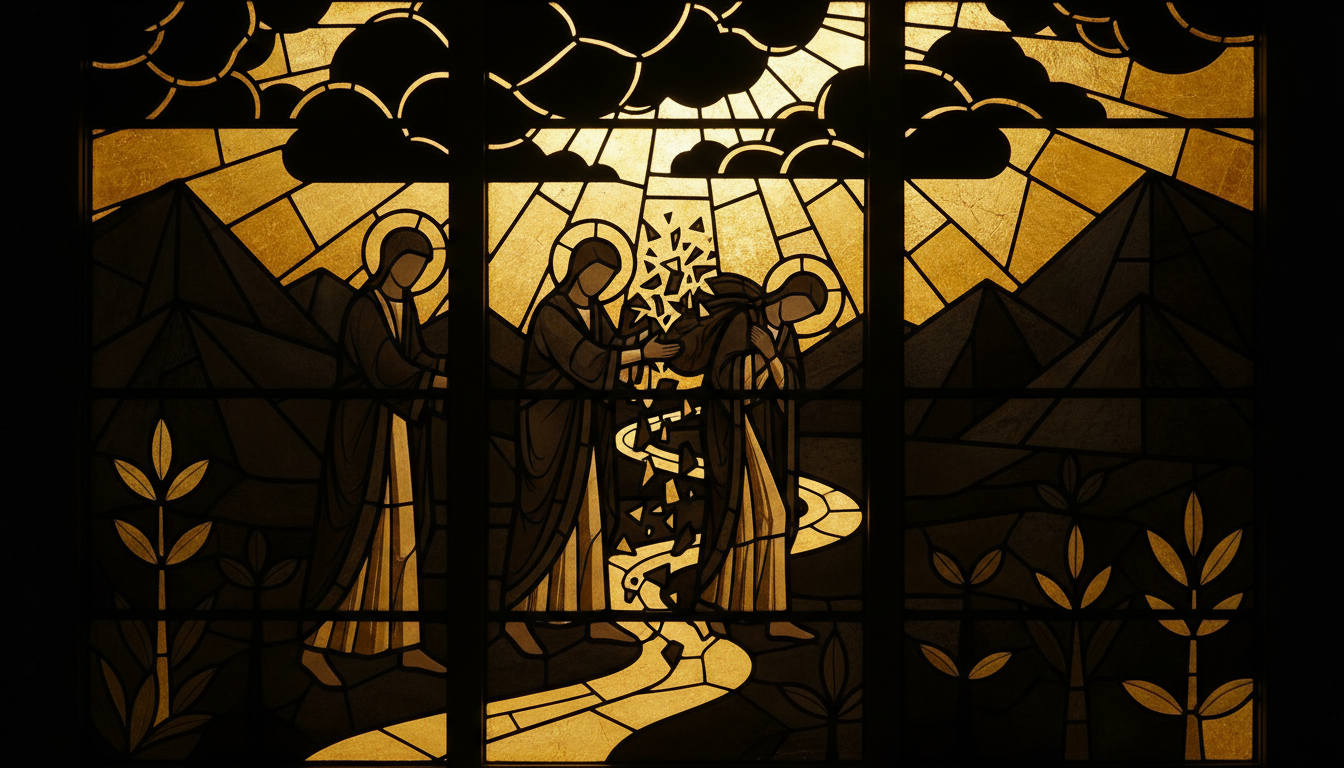
When the Backpack Falls
Picture the moment when you realize you've been carrying a backpack full of rocks for miles, thinking it was necessary equipment for the journey. Your shoulders ache. Your steps have grown heavy. Then someone walking beside you reaches over and lifts the pack from your shoulders. In that instant, you discover two truths: the rocks were never required, and your companion had been ready to carry the load all along.
Paul's words in Romans 3 capture that moment of discovery. He's about to tell us that God has been carrying what we thought we had to prove.
Take a moment to read Romans 3:21-31. Read it on Bible Gateway if you'd like.
The Great Turning Point
The phrase "But now" in verse 21 might be the most dramatic pivot in all of Paul's writing. In Greek, it's nyn de (νῦν δὲ, pronounced "noon deh"), and it signals more than a time change. This is a covenant earthquake. For three chapters, Paul has been building an airtight case that everyone, religious and irreligious, moral and immoral, stands guilty before God. The verdict was crushing: "No one will be declared righteous in God's sight by the works of the law." Romans 3:20, NIV.
Then comes this glorious interruption. "But now", as if God himself has stepped into the courtroom with an announcement that changes everything.
What follows rewrites the entire human story. A righteousness from God has been made known, one that comes "apart from the law" yet is "to which the Law and the Prophets testify." Romans 3:21, NIV. Notice the beautiful tension here. This isn't God changing his mind or abandoning his standards. The very scriptures that revealed our inability to measure up have been pointing all along to this different way.
Where Mercy Meets Justice
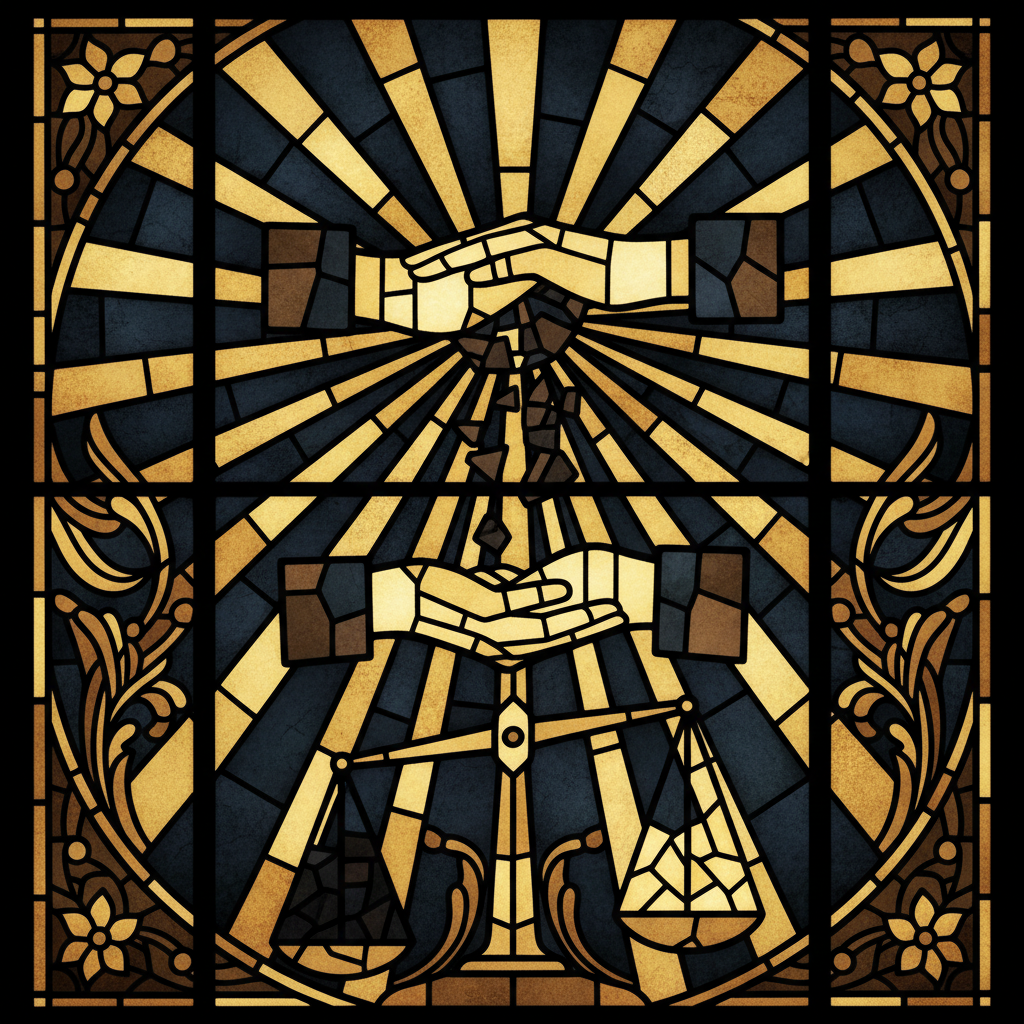
The heart of Paul's message beats strongest in verse 25, where he uses a word that would have stopped his Jewish readers cold: hilasterion (ἱλαστήριον, pronounced "hil-as-TARE-ee-on"). This is the word for the mercy seat, the golden lid of the ark of the covenant where, once a year on the Day of Atonement, the high priest would sprinkle blood for the sins of Israel.
But Paul does something remarkable. He says God presented Christ himself as this hilasterion. The place where God's presence dwelt, where blood was offered, where mercy and justice kissed, that place is now a person. Christ becomes both the priest who offers and the sacrifice offered, both the place of meeting and the means of atonement.
This isn't God overlooking sin or pretending it doesn't matter. Paul carefully explains that God "did it to demonstrate his righteousness at the present time, so as to be just and the one who justifies those who have faith in Jesus." Romans 3:26, NIV. The cross proves that God takes sin seriously enough to absorb its consequences himself. Divine justice isn't compromised; it's satisfied through divine love.
The Righteousness That Travels Light
Throughout these verses, Paul keeps returning to a phrase that would have puzzled his readers: "the righteousness of God." He's not talking about God's moral perfection, though God is certainly perfect. Instead, Paul uses dikaiosyne theou (δικαιοσύνη θεοῦ, pronounced "dik-eye-oh-SOO-nay THEH-oo") to describe a righteousness that God provides and gives as a gift.
This righteousness travels light because it doesn't depend on our performance inventory. Paul emphasizes it comes "through faith in Jesus Christ to all who believe." Romans 3:22, NIV. Not through perfect law-keeping. Not through religious achievement. Not through moral superiority. Through faith, which is simply the empty hand that receives what grace provides.
And notice the scope: "There is no difference between Jew and Gentile, for all have sinned and fall short of the glory of God." Romans 3:22-23, NIV. The same diagnosis that levels all human pride, we all fall short, becomes the doorway to grace. When everyone needs the same gift, no one can boast about deserving it more.
Living Without the Backpack
What does it mean to live in this freedom? Paul anticipates our questions. "Where, then, is boasting?" he asks in verse 27. The answer: "It is excluded." Not just discouraged or minimized, excluded entirely. When righteousness comes as a gift, both our successes and our failures lose their power to define us.
Think about what this means. The voice that whispers "you're not good enough" meets its match in these words: "All are justified freely by his grace." Romans 3:24, NIV. Freely. Without payment. Without earning. The exhausting project of proving our worth can finally end.
But Paul goes further. This freedom doesn't lead to lawlessness. "Do we, then, nullify the law by this faith? Not at all! Rather, we uphold the law." Romans 3:31, NIV. When we stop trying to use the law as a ladder to climb to God, we can finally appreciate it for what it is, a revealer of God's character and our need. Faith doesn't destroy the law; it fulfills the law's deepest purpose.
The Freedom to Begin Again
Living without the backpack of self-justification opens surprising possibilities:
- Morning Declaration: Before your feet hit the floor, speak one sentence aloud: "Thank you that I do not have to earn what Christ has already accomplished." Let this truth settle in your body before the day's demands begin.
- Palms Down, Palms Up: Place your palms face-down on your knees and name one way you've been trying to prove yourself this week. Then turn your palms upward and say, "I receive what I cannot earn." You're not manufacturing righteousness, you're making room to receive it.
- Boasting Inventory: Write down three things you've been tempted to boast about, achievements, moral choices, even spiritual disciplines. Beside each one, write: "This is gift, not badge." What Paul calls excluded boasting becomes included gratitude.
- Permission Slip Practice: Write yourself a literal permission slip: "I give myself permission to rest from trying to prove my worth today." Sign it, date it, carry it. When the striving impulse rises, read your permission slip and take one slow breath.
- If you have time this week, Sabbath from Self-Improvement: Choose one day to deliberately refrain from self-improvement projects or moral scorekeeping. Spend 20 minutes simply sitting without agenda, practicing receiving your belovedness as unearned gift. Notice what arises when you stop trying to become worthy.
Start with whichever practice feels like relief, not requirement.
The backpack is off. The rocks were never necessary. God's righteousness has been revealed, and it comes to us not as wages for good behavior but as a gift received through faith. We are loved not because we measure up, but because God's love is the measure itself.
If this passage stirred something in you, let it lead into prayer. And leave room for whatever you're carrying today.
Prayer
God of the great "but now" moment,
Thank you for interrupting our exhausting efforts
with the news that righteousness comes as gift.
We confess how often we still reach for the backpack,
thinking we must prove what you've already declared.
Help us live in the freedom of being justified freely,
neither boasting in success nor despairing in failure.
Teach us the lightness of faith
that receives what it could never earn.
For all who feel crushed by the weight of not measuring up,
reveal again that Christ has become our mercy seat,
the place where justice and love embrace.
May we rest in your finished work
and reflect your grace to a watching world.
Through Christ, who carries what we cannot,
Amen.
The Single Strand
Psalm 121 — Inward (Self)

The God Who Never Blinks
You know the feeling. Walking alone at night, keys threaded between your fingers, scanning shadows, wondering if anyone would even notice if something happened. That hypervigilance exhausts you, but you can't turn it off. The world feels full of edges that could cut, and you're the only one watching.
The psalmist knew this feeling too. Looking up toward the hills, those ancient paths where bandits waited and loose rocks sent travelers tumbling, he asks the question we all carry in our chests: "Where does my help come from?"
Stop and read Psalm 121. Read it on Bible Gateway if you'd like.
Your Eternal Watchman
The Hebrew word for "keep" appears six times in these eight verses. Shamar (שָׁמַר, pronounced shah-MAR) means to guard, watch over, preserve, like a sentinel on the city wall who never leaves his post. But here's what catches my breath: while human watchers eventually slumber, need coffee breaks, get distracted by their phones, God "will neither slumber nor sleep."
Think about that. The Creator of heaven and earth pulls eternal night shifts over your life. No nodding off. No heavy eyelids at 3 AM. No need for someone to relieve Him at dawn. This isn't metaphor, it's the psalmist's declaration that God's vigilance over you never, ever lapses.
We exhaust ourselves trying to stay alert to every threat. We scan parking garages, check locks twice, rehearse escape plans. And we should be wise, this psalm doesn't tell us to be naive about danger. But it does tell us something revolutionary: we're not the only ones watching. Actually, we're not even the primary ones watching.
The psalm shifts from "my help" to "your foot" to "He who keeps Israel." This isn't accidental. It's the community of faith speaking back to our individual fears: "You're not walking alone. The God who made those very hills you're climbing? He sees every loose stone before you do."
Every Step Held
Notice the specific promise: "He will not let your foot slip." In Hebrew, regel (רֶגֶל, pronounced REH-gel) often stands for your whole stability, your entire journey. Ancient pilgrims knew that one wrong step on those mountain paths meant disaster. No ambulances. No cell service. Just you and the rocks below.
But the psalm insists that God watches each foot placement. Not just the big moments, job interviews, diagnoses, relationship decisions, but the small stumbles that could undo us. The 2 AM panic. The harsh word about to leave our lips. The temptation to give up. He sees the loose gravel before we step.
And then this stunning line: "The sun will not harm you by day, nor the moon by night." Day and night, conscious and unconscious, waking fears and midnight terrors, nothing escapes God's protective shade. Ancient travelers feared sunstroke and what they called "moon-strike" (lunacy, madness, the delirium of night exposure). The psalm says both realms fall under God's watch.
This isn't a promise that nothing hard will happen. It's a promise that nothing happens unwatched, unnoticed, uncared for by the One who made you. "The Lord will keep you from all evil; he will keep your life." Not just your body. Your nefesh (נֶפֶשׁ, pronounced NEH-fesh), your soul, your very being.
The Hills Are Not the Help
Here's the beautiful turn: those hills the psalmist looks toward? They're not where his help comes from. They're just the direction he looks while remembering that his help comes from the One who made those very hills. The creation points to the Creator, who has been watching over this journey all along.
"The Lord will keep your going out and your coming in." Every departure, every return. Every venture into the unknown, every trudge back home. Today, tomorrow, and, the psalm ends, "forevermore."
You can rest. Not because the world got safer, but because you were never the only one keeping watch.
If something stirred while you read, let it settle into prayer. Add your own words where they want to come.
Prayer
Lord, Maker of heaven and earth,
We confess how tired we are
from trying to be our own guardians.
We scan horizons for danger
while You never once close Your eyes.
Thank You for being the God who never blinks,
who sees the loose stone before our foot finds it,
who watches through every shadowed valley
and never needs someone to take the next shift.
Give us grace to rest in Your vigilance.
When fear keeps us hyperalert,
remind us that You are already watching.
When we feel alone in dangerous places,
whisper again that our help comes from You.
Keep our going out and coming in,
today and forevermore.
We trust our steps to Your unblinking care.
Amen.
Stay if you need to. There's more to say, and God isn't checking the time.
Ephesians 4:25-32 — Outward (Neighbor)

You know the feeling. It's 2 AM, and you're replaying that conversation again. The one where your words landed wrong. Where your temper flared before you could catch it. Where you said the thing you promised yourself you'd never say. The weight of it sits heavy on your chest, an ache that whispers: Why can't I just control myself?
Paul knew this exhaustion. He understood what it costs to manage your reactions all day, only to fail with the people who matter most. That's why these verses in Ephesians aren't another list of impossible standards. They're tools for the morning after.
Stop and read Ephesians 4:25-32. Read it on Bible Gateway if you'd like.
When Your Words Need Rebuilding
Notice how Paul doesn't just say "stop lying" or "watch your mouth." He gives us something deeper. When he contrasts "corrupting talk" with speech that "builds up," he uses architectural language. The Greek word for building up is "oikodome" (οἰκοδομή, pronounced oy-ko-do-MAY), the same root we get "edify" from.
This changes everything about how we view our verbal failures. When we've torn down with our words, we're not just commanded to feel bad about it. We're given tools to rebuild. Paul says our speech should "give grace to those who hear." Not perfection. Grace.
The goal isn't flawless communication where we never hurt anyone. The goal is restorative communication, words that actively repair what we've damaged. When you snap at your teenager, the new self doesn't mean you'll never snap again. It means you have language for rebuilding: "I'm sorry. My frustration isn't about you. Can we try that conversation again?"
Paul's not interested in people who never mess up. He's equipping people who know they will.
The Sacred Work of Same-Day Repair
Then there's this curious command: "In your anger do not sin: Do not let the sun go down while you are still angry." Paul acknowledges that anger itself isn't sin. But he warns about what happens when we let it ferment overnight.
The reason is sobering: unresolved anger gives the devil "a foothold." The Greek word is topos, a place, a strategic position. When we nurse our anger through the night, we're literally giving destructive forces real estate in our relationships. Every sunrise on unaddressed hurt compounds the damage.
But Paul's solution isn't to suppress the anger or pretend it away. It's same-day repair. Before sleep, before the hurt calcifies, we attempt restoration. This doesn't mean every conflict gets perfectly resolved by bedtime. Sometimes the attempt is all we can manage: "I'm still hurt, but I don't want this to grow between us. Can we talk more tomorrow?"
Paul knows how quickly small wounds become permanent divisions. How today's harsh word becomes tomorrow's cold distance. So he gives us a timeline: deal with it today. Not perfectly. Not completely. But begin the work before another day passes.
This same-day ethic extends to all our failures in this passage. When we've taken what isn't ours, we give. When we've torn down with words, we build up. When bitterness creeps in, we actively choose kindness. The new self isn't someone who never struggles. It's someone who has tools for rapid repair.
The Foundation Underneath
All of this rests on one foundation: "Be kind to one another, tenderhearted, forgiving one another, as God in Christ forgave you." The entire ethical framework depends on this truth. We can attempt same-day repair because God has already repaired what we could never fix. We can rebuild with our words because Christ rebuilt what we destroyed.
The new self isn't an achievement. It's an identity received. And from that identity flows a way of moving through the world, one where failures become opportunities for grace, where broken words can be rebuilt, where anger gets addressed before it destroys.
If this passage found you in the tender place of recent failure, let that lead you into prayer. Your own words matter here too.
Prayer
God of second chances and same-day grace, we bring you our failures with words and reactions. Thank you that you don't demand perfection but offer tools for repair. When we've torn down, teach us to rebuild. When anger lingers, give us courage for difficult conversations before the day ends. When our old patterns feel stronger than our new identity, remind us that we are already forgiven, already being made new. Help us extend to others the same patient grace you've shown us. Through Christ, who rebuilds what we cannot. Amen.
Ready to start? Subscribe to The Full Braid or The Single Strand and receive a new devotional with audio every morning.